
SNAPSHOTBY MIGO
A CAREER-FOCUSED WEBSITE
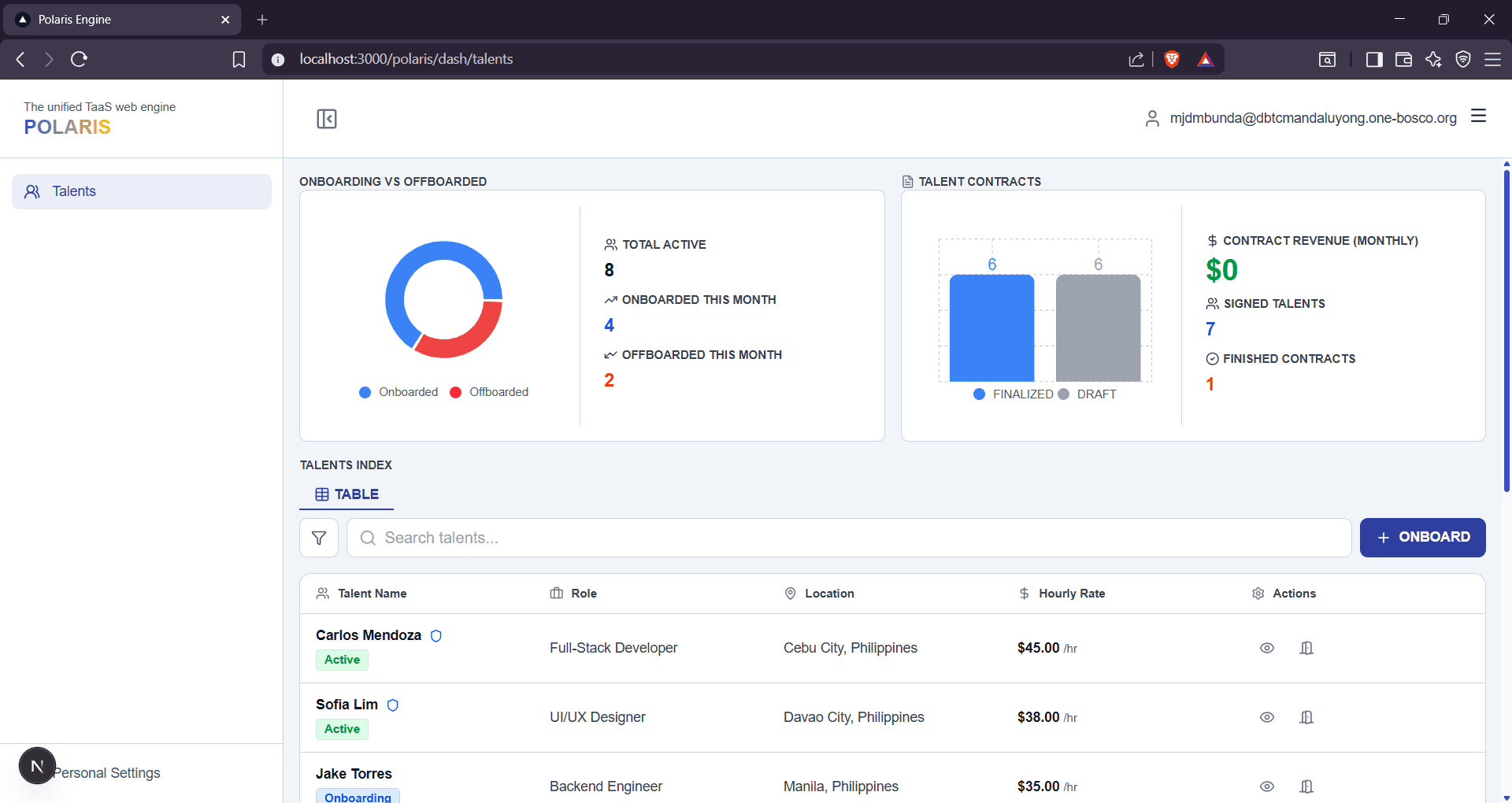
A simulated case-study ERP system built around a mock talent agency, Meridian Nexus Group Ltd, with business requirements based on real-life data and research, solved by a fictional ERP solution called Polaris Engine. Built as a full-stack web engine on Next.js App Router with React 19, combining server-rendered routes, client UI, and API handlers in one codebase. Used Supabase (PostgreSQL, Auth, Storage) with server-side SSR clients for secure session handling. Designed a role-aware security model using PostgreSQL RLS policies across guest, talent, client, ops, finance, admin, and superadmin roles for least-privilege data access. Modeled a domain-first relational schema (profiles, talents, clients, contracts, vaults, vault files, feedback) with enums, constraints, and timestamps for data integrity, and automated lifecycle workflows via database triggers such as auto-creating contract vaults on finalization. Centralized auth flow through Next.js API routes and middleware-based route protection, with a CI/CD-ready stack via GitHub workflows and Vercel deployment hooks. Development became increasingly difficult as a solo developer working with PostgreSQL and Next.js's App Router structure, compounded by repeated Supabase rate limiting that blocked access to the app even in development, and growing friction switching between development and deployment environments.
Meridian Nexus was an ambitious project, a full-on mock simulation of composed of three components: a simulated client (Meridian Nexus Group Ltd), a solo software engineer (me), and the product itself (Polaris Engine). As ambitious as that project was, it was the straw that broke the camel's back: I was completely messed up by scope creep, and it affected not only me but also the Communeye brand which was supposed to ship content based on the progress of Project Meridian Nexus or PMN.
This was when I learned I needed to slow down and actually plan things better. Admittedly, artificial intelligence inflated my own pride and confidence in learning technologies as efficient as possible without stopping to think on the reward gained and the core rationale of learning itself. I kept on building and building, empowered by modern LLM tooling, not knowing that the gap of what I could be building and what I pragmatically can achieve in a certain timeframe has been getting worse and worse. My head was pulled out of the clouds, and I was deprecating in some skills I had been building up for years at this point because of LLM abuse. I needed to take a step back in order to assess where I wanted to go as a developer, and how I can repair my relationship with properly learning, adapting, and applying my own knowledge as a software engineer.
On the more technical side, PMN had a web application as the product, but it also had a pipeline for development to production - an infrastructure built with Vercel, Supabase, and GitHub Actions runner. It was my first project where I had two Supabase environments which I actively used for both development and production, which helped in my overarching decoupling on how to properly work between environments (even as a single person).
I am still quite proud of the progress of this system, and remains to me both an achievement to be proud of and a scar to remember.
11 Screenshots Archived