
SNAPSHOTBY MIGO
A CAREER-FOCUSED WEBSITE
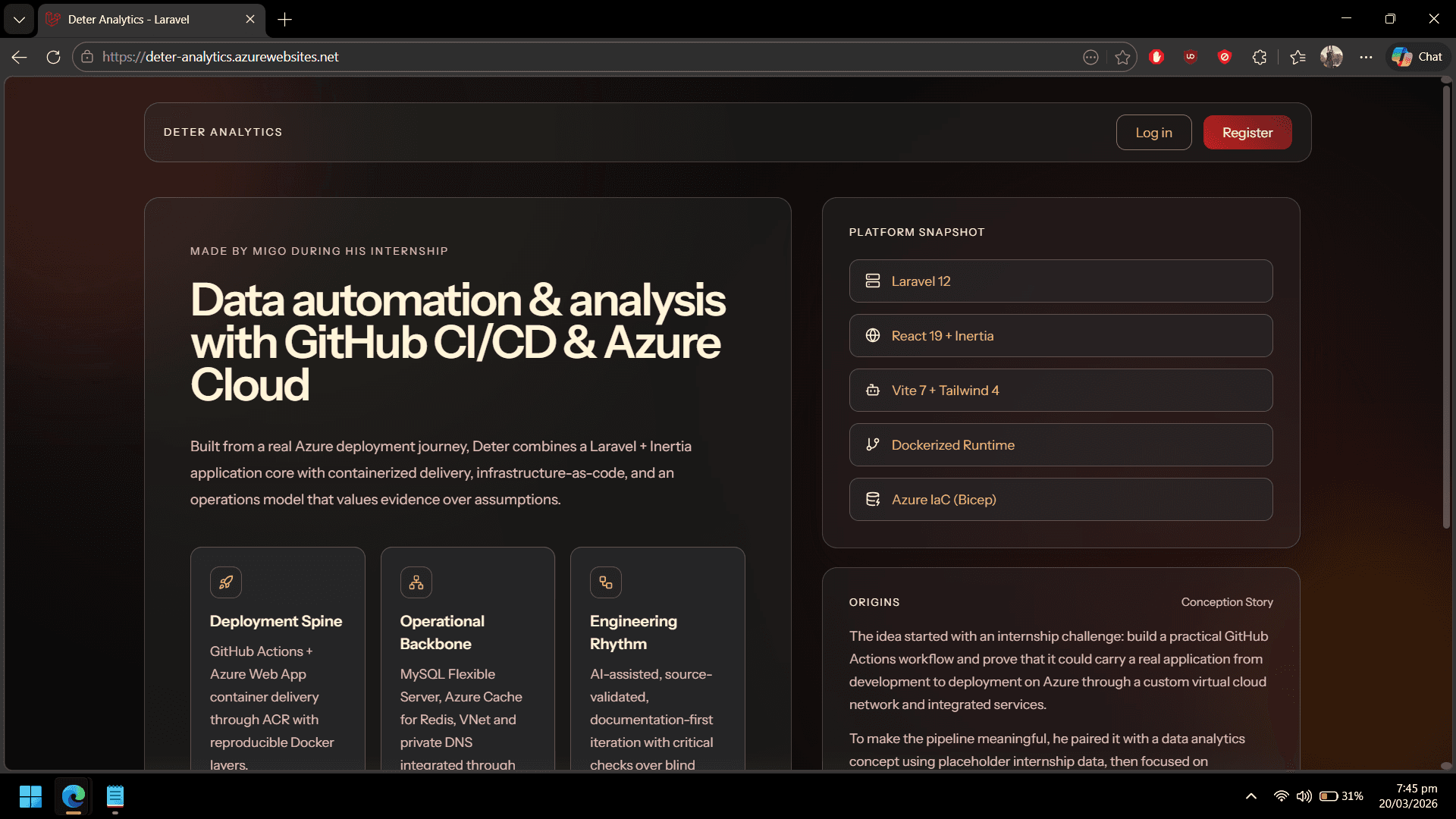
A cloud-native Laravel analytics application and CI/CD deployment pipeline built for data automation and analytics, using a monolithic Laravel backend with a React/Inertia frontend, spanning PHP, TypeScript/React, Vite, Tailwind CSS, and Bicep Infrastructure as Code. Features a containerized architecture with multi-stage Docker builds, Docker Compose orchestration, Nginx reverse proxying, PHP-FPM, and Supervisor process management. Built an automated GitHub Actions CI/CD pipeline for Docker image builds, Azure Container Registry pushes, and continuous deployment to Azure App Service. Provisioned enterprise-grade Azure infrastructure via Bicep IaC, including App Service, Container Registry, MySQL Flexible Server, Redis Cache, Virtual Networks, and private DNS, following GitOps practices. Includes a mock analytics dashboard with statistics, paginated/filterable user tables, data cleaning utilities (department normalization, duplicate detection), and license management with upgrade recommendations. Used Composer for PHP dependencies and pnpm with workspace configuration for a monorepo frontend, plus environment-based config management, GitHub Secrets for secret injection, and container-startup database migrations.
Deter was the second project I had done in my internship aside from Qualisync, which was birthed of an idea as a bet with a classmate of mine who I share the internship with.
He had given me a copy of an old dataset concerning ~1600 rows of data. I challenged him on who will be able to make a data analytics dashboard faster with certain features and operations (cleaning, license check, user identification, etc). His medium was primarily Microsoft Excel, while mine was a classic Laravel monolith. I had lost the bet since it was clearly that it was easier to clean in Microsoft Excel and do other operations, but I was able to complete the web application on a respectable timeframe.
Additionally, Deter wasn't just composed of a monolithic Laravel application: it was also a cloud-native infrastructure project, with CI/CD using GitHub Actions and Docker imaging and containerization. I used Azure Bicep which was my first Infrastructure-as-Code/Domain-specific Language, and configured the environment so that my local GitHub repository could connect thru my Azure resource group using credentials in my secrets management.
Running my first CI/CD pipeline successfully to the cloud has been a magical experience for me, especially since Qualisync had really bad CI/CD and I couldn't maximize it properly since I hadn't deployed Qualisync. But with the project, I learned how to use CI/CD properly with GitHub Actions and Microsoft Azure. Sure, there were probably other ways to simplify the process, but I was ecstatic to see steps within my pipeline work incrementally.
20 Screenshots Archived