
SNAPSHOTBY MIGO
A CAREER-FOCUSED WEBSITE
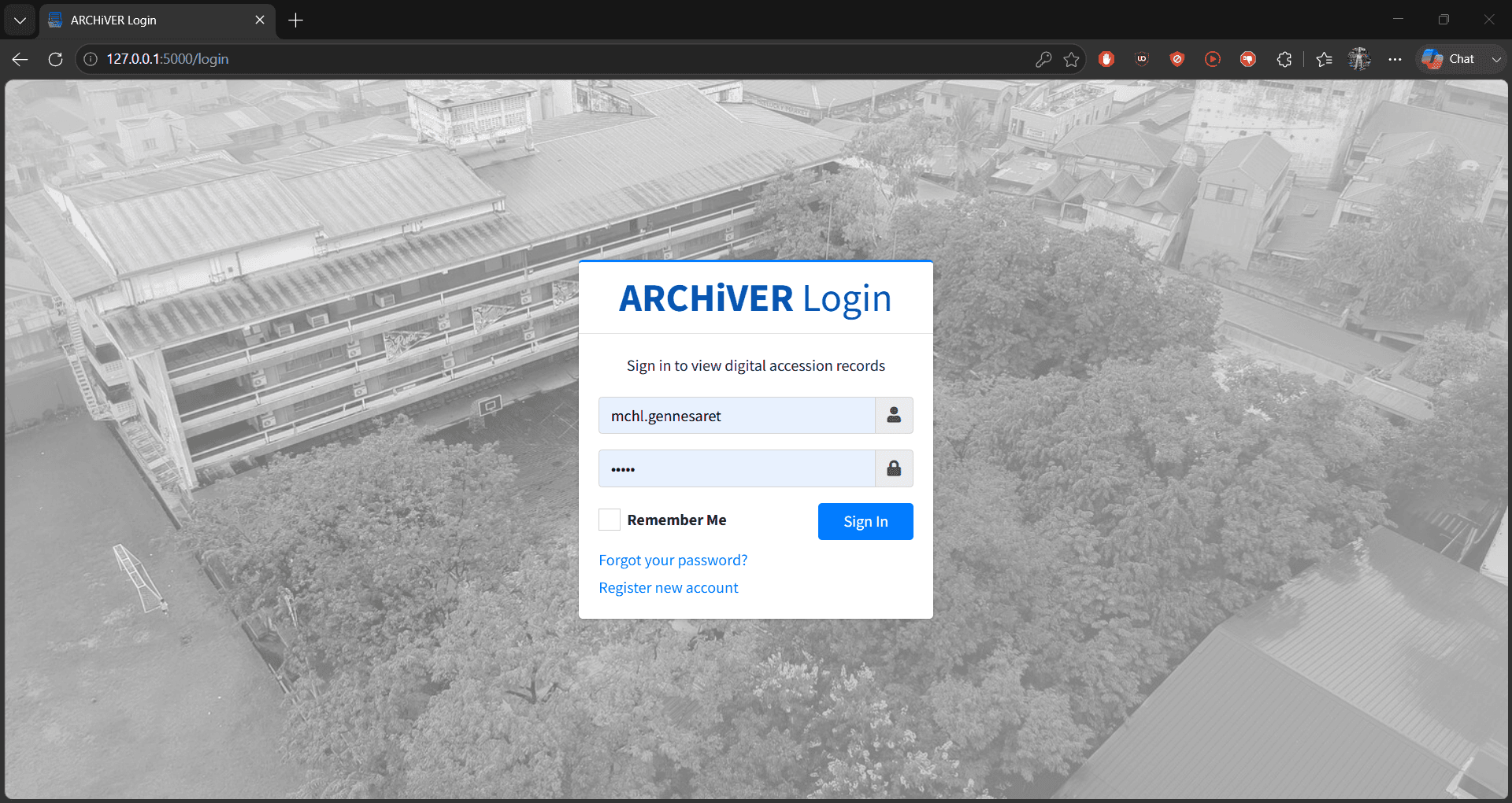
A digital accession record management system built with Flask, MySQL, and AdminLTE. Streamlines record management with multi-user functionality and role-based permissions for secure, organized access. Features a searchable table for locating accession records by attributes like ISBN, title, and author, with an intuitive CRUD system accessible via the data table and control menu. The UI is enhanced with AdminLTE (a Bootstrap-based CSS framework), Jinja2, FontAwesome, jQuery, and AJAX. Archived as of May 2025.
This project basically marked the beginning of my project-building spree which I continued from second year all the way to now, where I still build projects (Snapshot, this portfolio website!) but have gained so much insight, experience, realization, and lessons from countless decisions that I ended up paying the price over time.
ARCHiVER was initially conceptualized from a group project involving me and a few of my classmates during second year: the idea was that instead of finding a digital solution for the library borrowing management system (which the library of our school did not permit us due to already having an existing system), we ended up making a digital system for the accession records. I remember the accession records itself being piles upon piles of documents dating years of information... and there was no way to manage that.
But what was the result of that group project ended up being a Visual Basic application, to which we nearly failed the final project despite having a near-functional system that can be deployed locally in the library due to having unclear instructions and plenty of indecisive opinions on our work by the professor. Me and my team fiercely defended our work, but still we were left disappointed.
On the bright side, I was starting to learn on how to build servers using Python, Flask, AdminLTE (CSS Bootstrap framework), and such. I asked my groupmates if I was allowed to take our idea and make another project with the same premise but with websites instead of an application. Fortunately, they had allowed me... and I ended up building this after a while.
Furthermore, I had demonstrated this during the end of one of our subjects (Object-oriented Programming) because of my professor calling me onto the front of the class. He was aware of my progress as he was the one who recommended me Flask, and since he was also our professor for Web Systems & Technologies, he decided it was best for the class to have a sneak peek on what was about to come for the next semester.
9 Screenshots Archived